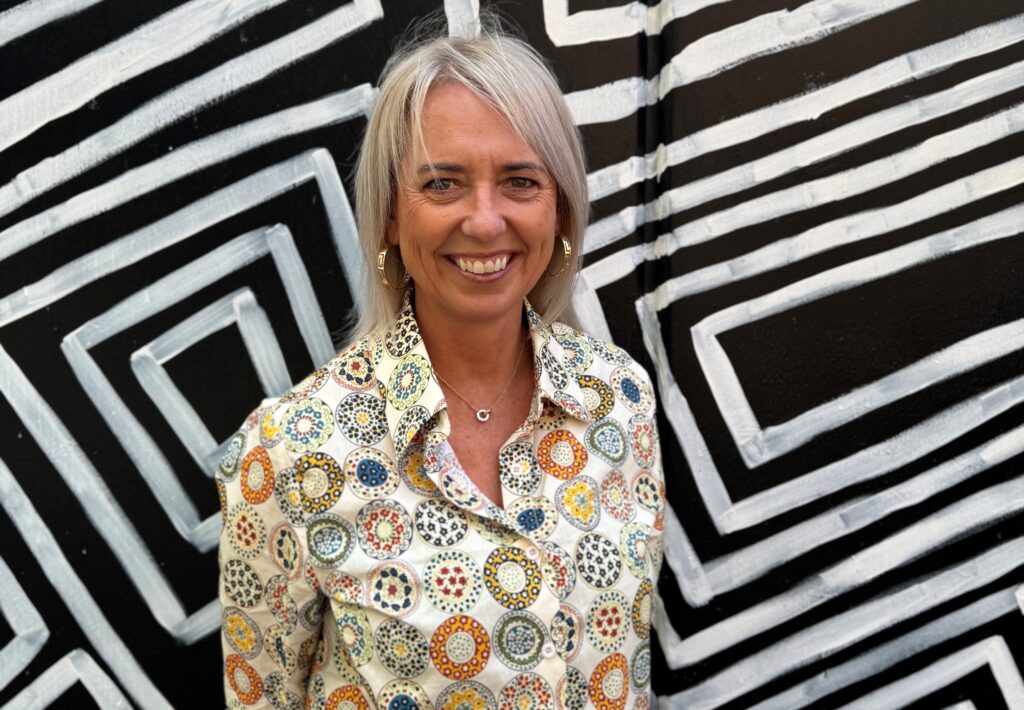
As I come to the end of my time as South Australia’s Guardian for Children and Young People, people have asked what this work has left me with.
Some assume the role would make you cynical. Others imagine it must be overwhelming to spend your days hearing about abuse, neglect, family violence, homelessness and children whose lives have taken a path that none of us would choose.
The truth is more complicated than that.
This work has certainly exposed me to the consequences of poor decisions, fractured systems and opportunities missed. I have seen children who have carried responsibilities far beyond their years. I have met young people who have learned not to expect adults to stay, because experience has taught them that people often leave. But if this role has changed me, it has done so in a different way. It has left me with an enormous respect for the children and young people I have had the privilege of meeting.
They are not defined by the files written about them or by the circumstances that brought them into care or youth detention. They are young people with the same hopes, humour, talents and insecurities as any other child. They want to belong. They want to feel safe. They want adults they can trust. They want someone to believe that their future can be different from their past. That shouldn’t surprise us, but sometimes it seems to.


Over the years I have spent time with hundreds of children and young people. They have challenged me, made me laugh, held me accountable and, more than once, changed my own thinking. I have learned that if you genuinely listen to children, they will usually tell you exactly what needs to change. Not in the language of policy or legislation, but in the language of everyday life.
They talk about wanting somewhere stable to live. Someone who keeps their promises: a worker who knows them well enough to notice when something is wrong; a teacher who expects them to succeed; a chance to make mistakes without feeling that one mistake will define the rest of their lives.
None of those aspirations are extraordinary, they are the things most families hope their own children will have.
That has become one of the greatest lessons of this role. We often speak about children in care as though they need something fundamentally different from other children. In reality, they need many of the same things. They simply need us to work harder to ensure they receive them.
My role has also given me a unique perspective on government. I have worked alongside dedicated public servants, carers, teachers, police, health professionals, advocates and community organisations who devote their careers to improving the lives of children. Many do extraordinary work, often without recognition and under considerable pressure. I have never doubted their commitment.
What I have come to understand, however, is that good people do not always produce good systems. Government is necessarily built around legislation, funding, accountability and process. Those things matter. They protect fairness, consistency and public confidence. But children do not experience government through organisational charts or policy frameworks. They experience it through the adults who walk beside them every day.
The challenge for every government is remembering that distinction. Children do not measure us by how many strategies we publish or how many reforms we announce. They measure us by whether life feels safer, more stable and more hopeful than it did yesterday. That is a much harder test.
Independent oversight exists because governments, regardless of political persuasion, need someone prepared to ask difficult questions and to keep children’s experiences at the centre of public decision-making. It is not about criticising for the sake of criticism. Nor is it about searching for failure. At its best, independent oversight helps governments see what they cannot always see from within their own systems.


It has also reinforced something I have believed throughout my career: children are rarely well served when their wellbeing becomes entangled in politics. Every government inherits challenges and every government makes decisions that will be debated… That is the nature of democracy. But there should be some matters that rise above political contest: whether a child is safe; whether a young person leaving care has somewhere to live; whether a child in detention is treated with dignity; whether Aboriginal children are supported to remain connected to family, culture and community.
These are not questions of ideology, they are questions about the kind of society we choose to be. The responsibility, however, does not rest with governments alone. One of the things that has troubled me over the years is how easily we speak about “the system”, as though children in care somehow belong to it.
Spoiler… they do not, they belong to all of us.
The child walking into school from a residential care home is part of our community. The young person leaving detention is returning to our community. The teenager trying to navigate adulthood after growing up in care will become our neighbour, our colleague, perhaps one day a parent raising children of their own.
Their future is connected to ours, whether we acknowledge it or not.
As I leave this role, I remain hopeful, not because the work is finished – it is not. Not because the challenges have become easier – they haven’t. I remain hopeful because I have seen what is possible when even one adult refuses to give up on a child. I have seen young people who were told they would fail to complete school, find work, reconnect with family, build healthy relationships and create lives that once seemed beyond reach.
Public debate often focuses on the moments when systems fail. We should never stop examining those failures, but we should also remember what sits underneath this work. It is, ultimately, an expression of what we owe one another.
I believe that every generation decides what it values. It decides where it directs its attention, its resources and its compassion. My hope is that we continue to build a South Australia where children are not valued because they are easy to help, but because they are children. Where decisions affecting them are guided by their long-term interests rather than short-term politics. Where we are prepared to invest in their futures before problems become crises.
Long after reports are tabled and governments change, the children we have cared for will still be living with the consequences of the decisions we made.
I hope they look back and know that, when it mattered most, we chose them.
With my whole heart, I thank the children and young people who have embraced me as their Guardian, I am a better person, professional and better mum because of you… it’s as simple as that.