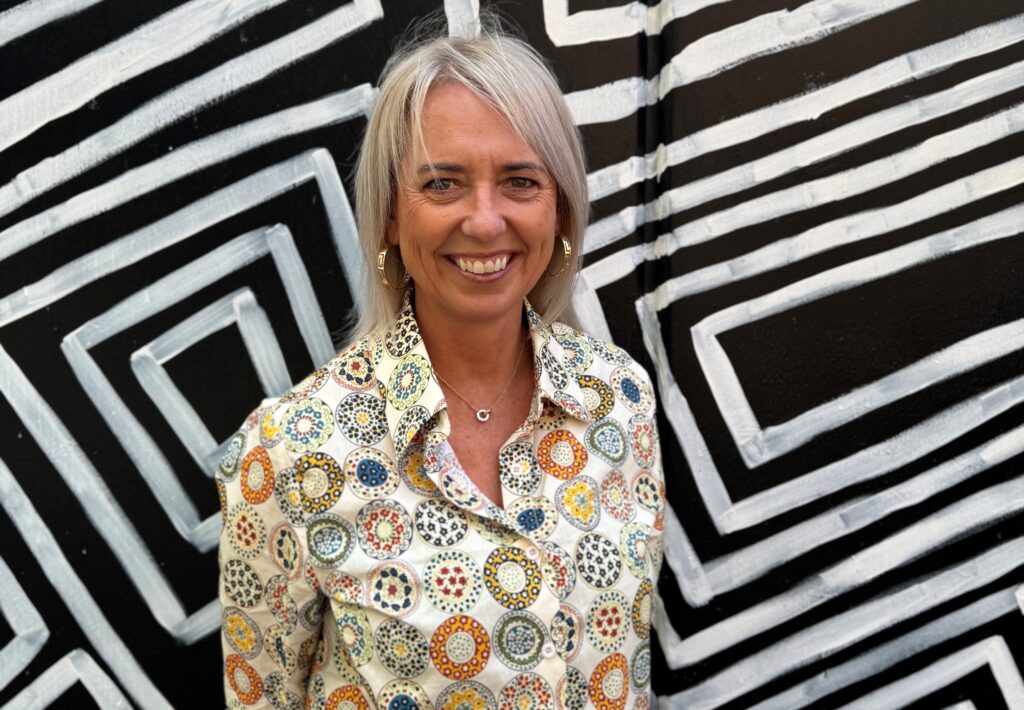
By Guardian, Shona Reid.
I want to share with you a story.
A young person in care, disconnected from their family, bouncing through placements, missing school, getting into trouble.
Their name doesn’t make the papers until they offend. And when it does—they’re “a thug”, “a gang member”, a “danger to society.”
No one prints what they’ve survived. No one prints what systems failed them. No one prints what might have changed — had we listened sooner.
Youth crime is the headline.
We’ve heard it on talkback radio. We’ve seen it splashed across the front pages. We’ve even heard it from our parliaments. But we haven’t heard enough of the truth.
A recent ABC analysis pulled apart the statistics behind the scare campaigns. It found; there is no national youth crime wave.
In fact, in every state and territory, youth crime rates have declined.
In South Australia, a SACOSS analysis showed youth offending has more than halved since 2008. And youth make up less than 10% of all offenders.
So why do we still feel like things are getting worse?

Because fear travels faster than facts. Because perception is being driven by headlines—not evidence.
A 2024 study into youth crime reporting in Queensland reviewed 173 news headlines. The results:
- 81% were negative
- Only 7.45% were neutral
- Just 11% were positive or balanced
Headlines didn’t just report facts. They created a mood—one of chaos, threat, and moral decay.
These headlines didn’t just describe events. They defined young people and framed them not as children, but as problems.
In South Australia, a young person missing from care is reported as “absconding”—not as being in distress.
A child with a trauma background is called “a repeat offender”— not a survivor of a system that failed to intervene early.
In a 24/7 media environment, a nuanced story doesn’t get clicks like a crisis does. And in politics, fear wins votes faster than hope.
An ABC’s analysis showed how youth crime data is being misused across multiple states.
Some politicians cherry-pick short-term spikes, others ignore falling rates in favour of outlier cases.
It’s our children who pay the price in policy, perception, and the stories that follow them for the rest of their lives.
Especially children who are already on the margins. Children in contact with child protection. Children with disabilities. Aboriginal children. Migrant and refugee children.
The Centre for Multicultural Youth has shown how entire communities are vilified based on the actions of a few.
At one point, African Australian young people made up just 1.3% of youth offenders in Victoria, yet they were mentioned in a disproportionate number of headlines.
Racialised narratives deepen alienation and push children even further to the margins.
As one young person said: “Imagine opening up your newspaper only to find a headline which suggests that all young people like me, who have my skin colour, are criminals. We’re not all criminals – very few of us are – But every time we see another instance of racial discrimination or racial stereotyping, it makes us feel just a little bit more disconnected from the very society that we call home.”

This is what happens when the narrative about children is hijacked. It shapes the systems we build around them. We start drafting laws based on fear. We push for mandatory detention. We strip away bail protections for children. We label loose groups of teens as “gangs”—and use that label to police, punish and isolate.
We now spend over $1 billion a year locking up children in Australia, and yet—84.5% of those released from detention reoffend within 12 months.
That’s a system on repeat. That’s the price of getting the story wrong.
Let’s talk about the other half of this equation — Politics.
When a government is under pressure, when public confidence dips, when social systems feel strained—there’s a temptation to find a simple villain.
And right now — in far too many press conferences — that villain is the child in the hoodie.
This is the politics of populism, and populism loves panic because panic creates clarity for people who feel powerless.
- In Queensland — harsh bail laws were introduced even after clear warnings from experts that it would harm children and fail to reduce offending.
- In Victoria — migrant youth were scapegoated and used as props for electoral messaging about law and order.
- In South Australia — we are now seeing early moves to adopt “street-gang” laws for children. These are based on laws designed for outlaw motorcycle gangs — not disaffected teenagers on the edge of community.
These are not decisions grounded in child development or human rights.
They are decisions rooted in political expediency, and they are recalibrating our moral compasses.
We lose our ability to see children as children. We lose the opportunity to lead with evidence.
The public starts to believe that some kids don’t deserve rights. That they are beyond help.
When we believe that—it becomes easier to justify systems that lock them up, write them off, and leave them behind.
This is our challenge: To hold the line against political fearmongering, to demand that our leaders speak not about what is popular—but what is principled.
To remind our communities, that the measure of a society is not how it treats its most perfect children— but how it responds to the most troubled, the most hurt, the most marginalised.
Because we are not just shaping laws. We are shaping a moral climate.
So, to every advocate, policymaker, carer, teacher, community leader:
I ask you—What story are you choosing to tell? Because children are listening. And so is the nation.
The speech above was presented by Guardian Shona Reid at The Children and Young People at Risk Summit 2025